 Choosing the right colors for your wardrobe is arguably the most powerful styling tool at your disposal. Yet, for many men, it remains an intimidating concept shrouded in mystery. If you’ve ever stood in front of your closet wondering why certain combinations work while others fall flat, you’re not alone.
Color theory isn’t just for artists and designers – it’s a practical skill that can transform your everyday style. In this comprehensive guide, we’ll break down the fundamentals of color in men’s fashion, teaching you how to create harmonious outfits that not only look good but also complement your natural features.
Understanding the Color Wheel: Your Style Foundation
At the heart of color theory lies the color wheel – a visual tool that organizes colors in a way that reveals their relationships to one another. For men’s fashion, understanding these relationships is the first step toward creating sophisticated outfits.
Primary, Secondary, and Tertiary Colors
The color wheel is built on three primary colors: red, blue, and yellow. These are the foundation from which all other colors are created.
Secondary colors – green, orange, and purple – are formed by mixing two primary colors. Tertiary colors are created by mixing a primary and a secondary color, resulting in hues like red-orange or blue-green.
In men’s fashion, the most common color palette consists of:
- Neutrals: Black, white, gray, navy, and various shades of brown
- Earth tones: Olive, burgundy, rust, and mustard
- Blues: Navy, cobalt, sky blue, and teal
- Reds: Burgundy, crimson, and rust
- Greens: Olive, forest green, and sage
Warm vs. Cool Colors
Colors on the color wheel are divided into two temperature groups:
- Warm colors: Reds, oranges, yellows, and some greens
- Cool colors: Blues, purples, and some greens
Warm colors evoke energy, passion, and confidence, while cool colors suggest calmness, stability, and professionalism. Understanding this temperature divide is crucial when selecting clothes that complement your skin tone and when creating balanced outfits.
Color Relationships: Creating Harmonious Outfits
The color wheel reveals several relationships that can guide your outfit creation:
Complementary Colors
Complementary colors sit opposite each other on the color wheel – blue and orange, red and green, yellow and purple. These pairings create high contrast and visual interest.
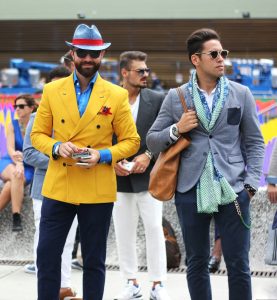
In men’s fashion, complementary colors work best when one is more muted or used in smaller quantities. For example, a navy suit (blue) with a subtle orange tie creates an eye-catching yet sophisticated look.
Analogous Colors
Analogous colors sit next to each other on the color wheel, like blue, blue-green, and green. These combinations create harmonious, low-contrast looks that are elegant and easy to pull off.
For everyday style, analogous color schemes are reliable choices. A green field jacket with blue jeans and a blue-green scarf creates a cohesive, put-together appearance.
Monochromatic Combinations
Monochromatic outfits use varying shades and tints of a single color. This approach creates a sophisticated, unified look that’s difficult to get wrong.
For example, a charcoal suit with a light gray shirt and a mid-gray tie creates depth while maintaining harmony. Adding texture through different fabrics elevates this straightforward approach.
Triadic Colors
Triadic color schemes use three colors equidistant from each other on the color wheel. While bold, these combinations can create balanced, vibrant outfits when used thoughtfully.
For casual looks, try combining muted versions of triadic colors – perhaps olive green chinos, a burgundy sweater, and navy accessories.
Color and Skin Tone: Finding Your Perfect Palette
One of the most overlooked aspects of color theory in men’s fashion is how colors interact with your natural features. Your skin tone, hair color, and eye color all influence which colors will make you look your best.
Understanding Your Skin Undertone
Skin undertones generally fall into three categories:
- Warm undertones: Yellow, peachy, or golden hues
- Cool undertones: Pink, red, or bluish hues
- Neutral undertones: A balance of warm and cool
A simple way to determine your undertone is to look at the veins on your wrist under natural light:
- Blue or purple veins suggest cool undertones
- Green veins suggest warm undertones
- A mix of both suggests neutral undertones
Colors for Warm Undertones
Men with warm undertones look best in earthy colors that echo their natural warmth:
- Earth tones: Camel, olive, rust, and mustard
- Warm neutrals: Cream, tan, chocolate brown
- Muted reds and oranges
- Warm greens like olive and forest green
Avoid: Harsh, icy colors like electric blue or fuchsia, which can clash with your natural warmth.
Colors for Cool Undertones
Men with cool undertones shine in crisp, clear colors:
- True white
- Navy and royal blue
- Gray
- Emerald and jade green
- Berry tones like burgundy and plum
Avoid: Orange, rust, and mustard yellow, which might make your skin appear sallow.
Colors for Neutral Undertones
If you have neutral undertones, you’re in luck – most colors will work well on you. Focus on the intensity of colors rather than their temperature:
- Clear, bright colors for high-impact looks
- Muted, dusty colors for subtle elegance
Contrast Levels: Matching Your Natural Features
Beyond skin tone, the contrast between your skin, hair, and eyes affects which color combinations flatter you most.
High Contrast
If you have a significant difference between your skin tone and hair color (like fair skin with dark hair), high-contrast outfits will complement your natural features. Try:
- Black and white combinations
- Navy with white or light blue
- Clear color distinctions in your outfits
Medium Contrast
If there’s a moderate difference between your skin and hair (like medium skin with brown hair), aim for medium-contrast combinations:
- Navy with medium blue
- Earth tones with contrasting accessories
- Layered looks with gentle color transitions
Low Contrast
If your hair color is similar to your skin tone (like fair skin with blonde hair), low-contrast outfits will look most natural:
- Monochromatic looks
- Subtle color variations
- Tonal outfits using different shades of one color
Practical Color Applications in Men’s Wardrobes
Now that we understand the theory, let’s explore practical applications for common wardrobe scenarios.
Building a Versatile Foundation
Start with a core wardrobe of neutral colors – navy, gray, white, black, and beige. These form the backbone of a flexible wardrobe and ensure maximum versatility.
For your foundation pieces (suits, trousers, outerwear), neutral colors provide the best value as they can be paired with nearly anything.
Adding Personality Through Color
Once your foundation is established, incorporate color strategically:
- Shirts and sweaters: These mid-level pieces are perfect for introducing color, as they’re visible but not overwhelming. Start with colors that complement your skin tone.
- Accessories: Ties, pocket squares, socks, and scarves are low-commitment ways to experiment with bolder colors and patterns. Use complementary or analogous color relationships to connect your accessories with your outfit.
- Seasonal adjustments: Adapt your color palette seasonally – lighter, brighter colors in spring/summer and deeper, richer tones in fall/winter.
Common Color Combinations for Men’s Outfits
These reliable combinations work for most men:
- Navy and burgundy: A classic pairing that works for business and casual settings
- Gray and blue: Versatile and easy to wear in any context
- Olive and navy: A rugged, masculine combination for casual looks
- Brown and blue: Natural yet sophisticated, especially good for warm seasons
- Charcoal and white: Clean, crisp, and foolproof for formal settings
Color Theory in Action: Outfit Formulas
Let’s apply these principles to create foolproof outfit formulas for different occasions.
Business Professional
- Base: Charcoal or navy suit
- Mid-layer: Light blue or white shirt
- Accent: Burgundy, green, or gold tie
- Principles used: Contrast between dark suit and light shirt; complementary or analogous relationship between suit and tie
Smart Casual
- Base: Navy chinos or gray wool trousers
- Mid-layer: Light blue Oxford shirt or olive sweater
- Outer layer: Brown or navy blazer
- Principles used: Analogous colors (blues) or complementary relationship (navy and brown)
Casual Weekend
- Base: Blue jeans or olive chinos
- Mid-layer: White, cream, or burgundy t-shirt/sweater
- Outer layer: Brown leather jacket or navy overshirt
- Principles used: Neutral foundation with strategic color accents
Common Color Mistakes to Avoid
Even with a strong grasp of color theory, there are pitfalls to watch for:
- Wearing colors that clash with your undertone: No matter how trendy, certain colors will never flatter your natural features. Respect your undertone.
- Using too many colors at once: Limit your palette to 2-3 main colors per outfit, plus neutrals.
- Mismatching formality levels: Some colors read as inherently more formal (navy, gray) or casual (bright red, orange). Ensure your color choices match the occasion’s formality.
- Neglecting proper contrast: An outfit without enough contrast can look flat and dull, while too much contrast can be jarring.
- Ignoring the power of neutrals: Don’t underestimate how sophisticated all-neutral outfits can be, especially with varied textures.
Developing Your Color Confidence
Color theory in men’s fashion isn’t about rigid rules but about developing an understanding that guides your choices. As you become more comfortable with these principles, you’ll naturally begin to experiment and develop your personal color palette.
Start by analyzing your most successful outfits – the ones that generate compliments or make you feel your best. What color relationships are at play? How do they relate to your natural coloring?
Take photos of successful combinations to reference later, and gradually expand your comfort zone by introducing new colors one piece at a time.
Conclusion: The Power of Purposeful Color
Understanding color theory transforms the way you approach your wardrobe, moving you from random selections to purposeful choices that enhance your natural features and communicate your personal style.
Remember that these guidelines are just that – guidelines. As you develop your color confidence, you’ll learn when to follow the rules and when to break them for creative effect.
The most stylish men aren’t those with the most clothes but those who understand how to use color to create harmonious, personalized outfits that look intentional rather than accidental.
By mastering the basics of color theory, you’ll not only look better but also simplify your daily dressing routine and make smarter purchasing decisions – ensuring every item in your wardrobe works in harmony with the rest.
What color combinations have you found work best for your style? Try applying some of these principles to your wardrobe this week and notice how a thoughtful approach to color can elevate even the simplest outfit.