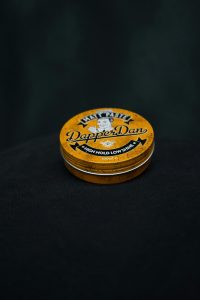
 The modern men’s grooming landscape has seen a significant rise in clay and paste styling products, which now dominate the market. These versatile formulations have gained prominence for good reason – they deliver natural-looking, textured styles that complement contemporary haircuts perfectly.
Unlike traditional styling aids that create a distinctly “styled” appearance, clay and paste offer a more relaxed, effortless aesthetic while still providing the necessary structure and control. They’ve become essential tools for men who prefer a look that appears intentional without seeming overly manufactured.
This comprehensive guide breaks down everything you need to know about these contemporary styling staples.
Clay vs. Paste: Understanding the Differences
Though sometimes referenced interchangeably, hair clay and hair paste are distinct products with unique properties and ideal applications.
Hair Clay: The Basics
What it is: Hair clay contains actual clay minerals (typically bentonite or kaolin) that provide its thick, sometimes slightly gritty texture.
Key characteristics:
- Matte to ultra-matte finish (minimal to no shine)
- Medium to strong hold capability
- Adds visible thickness and texture to hair
- Creates definitive separation and definition
- Typically denser and heavier than paste formulations
Best for: Hair clay excels at creating textured, defined styles without shine. It’s particularly effective for adding apparent thickness to fine or thinning hair, as the clay particles physically enhance individual strand diameter.
Hair Paste: The Basics
What it is: Hair paste has a smoother, more pliable consistency than clay, typically with a cream-like texture that distributes easily.
Key characteristics:
- Natural to low shine finish
- Medium hold with flexibility and movement
- Lighter weight than clay formulations
- Creates movable, reworkable styles
- Often includes conditioning ingredients for hair health
Best for: Paste is ideal for creating casual, tousled styles with natural movement. It allows for restyling throughout the day and typically creates a lighter feel in the hair compared to clay.
The Hybrid: Clay-Paste Products
To address diverse styling needs, many contemporary products combine elements of both clay and paste. These hybrid formulations aim to deliver the matte finish and texturizing properties of clay with the pliability and lighter feel of paste.
These products typically identify as “clay paste,” “clay cream,” or “matte paste” and offer an excellent option for those seeking the benefits of both product categories in a single formulation.
Which Hairstyles Work Best With Clay and Paste?
While clay and paste offer remarkable versatility, they particularly excel with certain contemporary styles:
Textured Crop
Short to medium-length styles with texture on top benefit significantly from clay, which creates definition between hair strands for that perfectly imperfect, separated appearance. This style works particularly well for men seeking a low-maintenance yet stylish look.
Modern Quiff
For a more relaxed interpretation of the classic quiff, paste provides the height and control needed while maintaining a natural appearance with subtle movement. This style balances sophistication with contemporary relaxed aesthetics.
Messy, Lived-In Styles
Both products excel at creating that coveted “day after” look – styled but not overly perfect. Clay delivers more definition and separation, while paste allows for greater movement and flexibility.
Tousled Medium Length
For men growing their hair into medium lengths, paste offers ideal control without weighing down the hair or creating an overly styled appearance. It provides just enough structure while honoring the hair’s natural movement.
Fades With Textured Tops
Clay works exceptionally well with popular fade haircuts, adding texture and control to the longer hair on top while maintaining a clean, matte finish that complements the precision of the fade.
Selecting the Right Product for Your Hair Type
The effectiveness of clay and paste varies considerably depending on your specific hair characteristics:
Fine or Thin Hair
Hair clay typically offers superior results for fine hair, as it adds thickness to individual strands and creates the appearance of fuller, more substantial hair. Look for lightweight clay formulations that won’t weigh hair down or create a flattened appearance.
Application tip: Apply clay to completely dry hair and focus on the mid-lengths and ends rather than the roots to prevent a flat appearance and maximize volume.
Thick Hair
Both products can perform well with thick hair. For maximum control, a stronger clay formula helps manage unruly thick hair effectively. If you prefer more movement, a medium-hold paste provides control while allowing your thick hair’s natural volume to express itself.
Application tip: Apply to slightly damp hair for easier distribution through dense, thick hair structures.
Curly Hair
Paste typically outperforms clay for curly hair, as its more pliable nature complements rather than restricts your natural curl pattern. Look for pastes containing moisturizing ingredients to combat frizz and enhance definition.
Application tip: Apply with a scrunching motion rather than straight combing to enhance your natural curl pattern while adding control.
Coarse Hair
Coarse hair benefits from either product but particularly from clay-paste hybrids that provide both control and conditioning benefits. Look for formulations containing natural oils that help soften coarse strands while maintaining structure.
Application tip: Apply to slightly damp hair and allow it to air dry for a more natural finish with improved manageability.
How to Apply Clay Properly
Clay requires specific application techniques to achieve optimal results:
Step-by-Step Clay Application
- Start with completely dry hair for maximum texture and hold
- Scoop a small amount (pea-sized for short hair, dime-sized for longer styles)
- Rub vigorously between your palms until it softens completely – this crucial step may take 10-15 seconds
- Work the product into your hair starting from the back and moving forward
- Use your fingers to create definition and separation where desired
- Style with your fingertips rather than a comb for the most natural-looking texture
Common Clay Application Mistakes
- Insufficient product warming: Clay needs to be fully emulsified between your hands before application to avoid uneven distribution
- Using excessive product: Clay is highly concentrated; excess product will create a dull, heavy appearance
- Applying to wet hair: Clay performs best on completely dry hair for maximum hold and texture definition
- Excessive restyling: Clay sets more firmly than paste; substantial restyling may require slightly dampening your hair first
How to Apply Paste Properly
Paste offers greater flexibility in application than clay but still has specific best practices:
Step-by-Step Paste Application
- Start with towel-dried or completely dry hair (slightly damp works well for many paste formulations)
- Emulsify a dime-sized amount between your palms until it becomes transparent
- Apply evenly throughout your hair, distributing from roots to ends
- Style with your fingers for a casual look or a wide-tooth comb for more definition
- For additional hold in specific areas, add small amounts of product as needed
Common Paste Application Mistakes
- Root-heavy application: Applying too close to the scalp can make fine hair appear greasy; focus on mid-lengths and ends
- Uneven distribution: Take time to work the product thoroughly through all your hair for consistent results
- Neglecting heat activation: Many pastes benefit from a quick blast of heat to activate their holding properties
- Unrealistic hold expectations: Paste provides flexible hold; for styles requiring extreme structure, you may need a stronger product
Pre-Styling Techniques for Enhanced Results
Your preparation before applying clay or paste can significantly impact your final results:
Blow Drying Techniques
For maximum volume and control with either product:
- Apply a small amount of pre-styling spray or mousse to damp hair
- Blow dry while using your fingers or a brush to create the foundation of your style
- Once completely dry, apply clay or paste to maintain and enhance the shape you’ve created
This method delivers the optimal combination of volume from blow drying and definition from your styling product.
Towel Drying Best Practices
If you prefer air drying before applying product:
- After showering, gently squeeze excess water from your hair
- Pat (don’t rub) with a towel to remove moisture without causing frizz
- For paste: Apply when hair is approximately 80% dry for easier distribution
- For clay: Wait until hair is completely dry for maximum hold and texture
Combining With Other Products
Clay and paste integrate well with other styling products when used strategically:
Layering Products
For complex styles requiring both volume and definition:
- Apply mousse or volumizing spray to damp hair
- Blow dry to create volume and establish the basic shape
- Apply a small amount of clay or paste to define and control the style
- Finish with a light application of flexible-hold hairspray if necessary
Cocktailing Technique
You can blend products together before application to create customized effects:
- Clay + sea salt spray = Enhanced gritty texture with moderate hold
- Paste + styling cream = Softer hold with improved moisture and subtle shine
- Clay + paste = Matte finish with improved distribution and flexibility
Refreshing Second-Day Hair
Both clay and paste can be reactivated for second-day styling:
- Lightly dampen your hands with water
- Run your damp hands through your hair to reactivate the product
- Restyle as needed, adding minimal fresh product only if necessary
Removing Clay and Paste Effectively
Proper removal ensures hair health and prevents product buildup:
Clay Removal
Clay can be more challenging to remove completely:
- Use warm (not hot) water to begin breaking down the product
- Apply shampoo to dry hair before adding water for more effective removal
- Work the shampoo thoroughly through your hair before rinsing
- Follow with conditioner to restore moisture balance
Paste Removal
Paste typically removes more easily:
- Rinse thoroughly with warm water
- Use regular shampoo as normal
- One wash is usually sufficient for complete removal
Addressing Product Buildup
If you use clay or paste daily, periodic deep cleaning helps maintain hair health:
- Use a clarifying shampoo once weekly
- Consider an apple cider vinegar rinse (one part ACV to four parts water) monthly
- Massage your scalp thoroughly when shampooing to remove product from the roots
Conclusion
Clay and paste have transformed men’s hairstyling by providing natural-looking results with sufficient hold to last throughout the day. By understanding the distinctions between these products and mastering proper application techniques, you can achieve professional-quality styles without an artificial appearance.
Begin with the product that best aligns with your hair type and desired style, and experiment with different application methods until you discover what works optimally for your specific hair characteristics. The ideal balance of control and natural appearance is what makes these contemporary styling products so valuable in modern men’s grooming routines.